


SEASN Participated in the 13th MAK International Agri-Business Conference
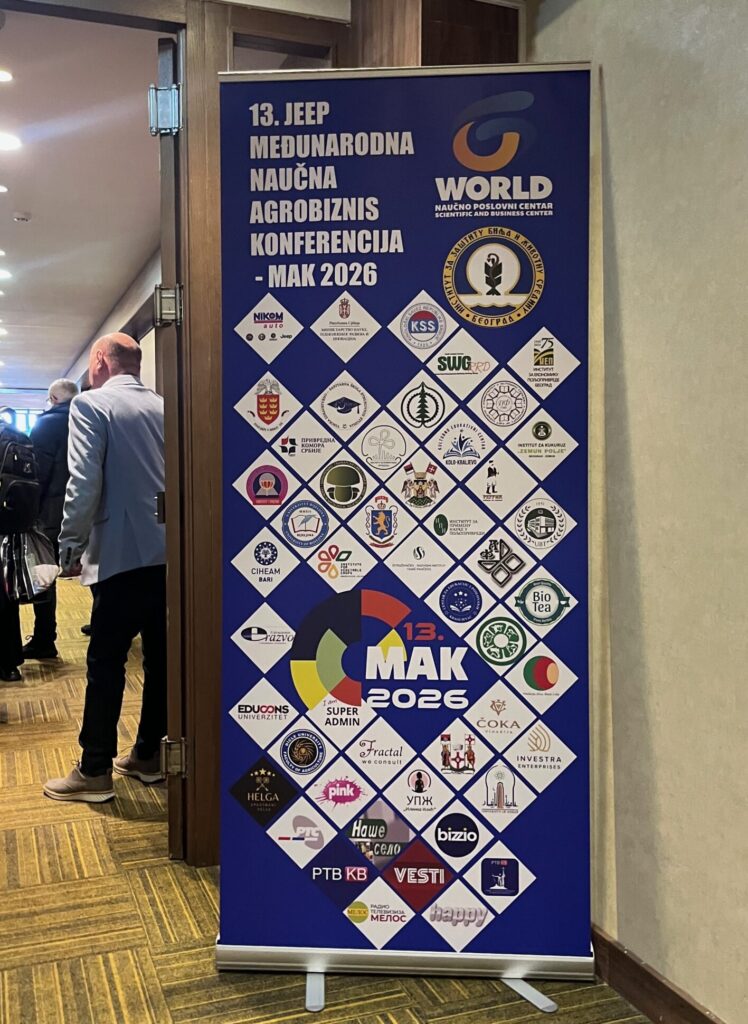
Representatives of the South Eastern European Advisory Service Network (SEASN) participated in the 13th International Agri-Business Conference MAK, which took place from 29 January to 1 February 2026 in Kopaonik, Serbia, contributing both to the scientific programme and to expert panel discussions.
A key highlight of SEASN’s participation was the presentation of the first research paper developed within the SEASN network, titled:
“The Role of the SEASN Network in Strengthening AKIS Development in EU and Non-EU Countries: A Comparative Review.”
The paper was also officially published in the conference proceedings, marking an important milestone for SEASN’s research and knowledge-sharing activities. The article examines the development of Agricultural Knowledge and Innovation Systems (AKIS) across EU and non-EU countries in South-East Europe, highlighting structural differences between more institutionalised EU systems and more fragmented non-EU environments. Its main findings emphasise the crucial role of advisory services, education, and knowledge transfer, as well as the importance of SEASN as a transnational bridging mechanism.
The central focus of the paper is how the SEASN network contributes to AKIS development in the region by acting as a knowledge-exchange bridge between countries with different levels of AKIS maturity. Through joint trainings, dissemination of project results, cross-border cooperation, and participation in EU-funded initiatives, SEASN enables mutual learning between EU and non-EU members. Countries with more established institutional structures and advisory systems share governance models, policy experience, and digital solutions, while countries with emerging AKIS frameworks contribute flexible, locally adapted, and innovation-driven practices. This two-way exchange does not impose uniform models, but rather encourages context-based adaptation, capacity building, and gradualalignment with European standards, ultimately strengthening advisory competencies and long-term regional cooperation.
The full paper is accessible here.
In addition to the scientific presentation, SEASN representatives also took part in a panel discussion titled “Climate Change and Water Management: Challenges of Natural Resource Management and Financial Sustainability in Agribusiness.” The panel was designed as an open and dynamic exchange among experts and addressed topics such as:
- the role of advisory services in helping farmers adapt to climate change, particularly in water management,
- the importance of knowledge, education, and technology transfer,
- long-term planning of water resources in the region,
- financial sustainability of public water systems,
- the necessity of cross-border cooperation,
- and priority measures for policy-makers.
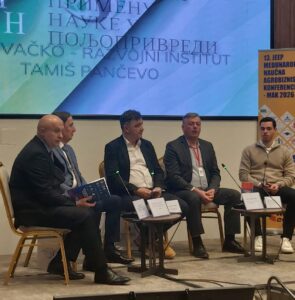
During the discussion, strong emphasis was placed on the understanding of water as a public and limited resource that requires responsible and long-term management. Participants highlighted that water availability is becoming increasingly uncertain and, in many regions, difficult to access. Therefore, adaptation measures must begin not only at the policy level but also directly on farms through practical technological and agronomic solutions (bottom-up approach). Among the proposed measures was improved soil management aimed at increasing soil water retention capacity, which can significantly reduce vulnerability to droughts and extreme weather events. The discussion underlined that advisory work, education, and international cooperation are essential pillars for building resilient agricultural systems capable of responding to climate and environmental challenges.
It was an honour for SEASN to connect and collaborate with fellow network members and partner institutions during the conference, including representatives from the Institute for Science Application in Agriculture (IPN) and the Institute for Plant Protection from Serbia, and the University of Life Sciences “King Mihai I” from Romania. Such meetings further strengthen professional ties and confirm the value of regional cooperation in advancing innovation, knowledge exchange, and sustainable agricultural development.


Leave a Reply