

Shaping the Future of European Agriculture: Young People, Women and Advisory Services in Focus
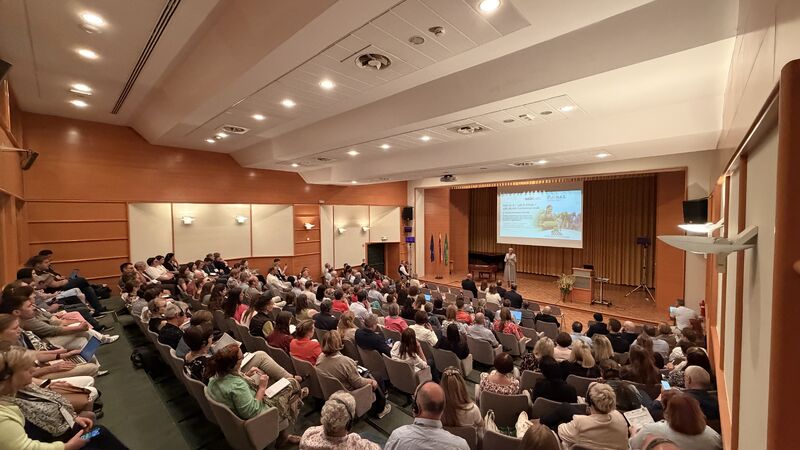
The 65th IALB, 15th EUFRAS and 12th SEASN Conference 2026 took place in Radenci, Slovenia, bringing together 180 agricultural experts, advisors, researchers and representatives of institutions and rural organisations from across Europe.
The conference was organised by the Chamber of Agriculture and Forestry of Slovenia, which is also a member of the SEASN network. Over three days, participants discussed the future of European agriculture, agricultural advisory services, generational renewal, the role of young people and women in rural areas, and the importance of knowledge, innovation and cooperation.
The conference was officially opened by Dr Jože Podgoršek, President of the Chamber of Agriculture and Forestry of Slovenia, who emphasised the importance of strong advisory services, connecting knowledge with practice, and involving young people in agriculture and advisory systems. Participants were also addressed by Regine Wiesend, President of IALB, Rui Almeida, President of EUFRAS, Dr Slađan Stanković, President of SEASN, and Mojca Erjavec, State Secretary at the Ministry of Agriculture, Forestry and Food of the Republic of Slovenia.
Young people and women at the centre of the discussion
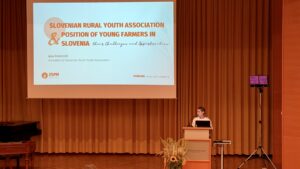 A strong focus of the conference was placed on young people and women in rural areas. Speakers highlighted that generational renewal is one of the key challenges for the future of agriculture, and that rural areas must remain attractive places to live, work and develop new opportunities.
Ajda Podlesnik from the Slovenian Rural Youth Association presented the organisation’s activities and pointed out that only 3.5% of farm holders in Slovenia were under the age of 35. Irena Ule from the Slovenian Rural Women’s Association highlighted the social and financial challenges faced by women and elderly people in agriculture, as well as the importance of networking, education and support for farming families.
The discussions underlined that young people and women must be more actively included in policy-making, advisory processes and the development of rural areas.
Knowledge transfer, AKIS and innovation
The plenary programme and thematic workshops addressed several key topics for the future of agricultural advisory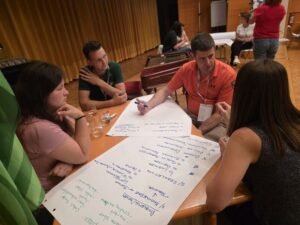 services, including knowledge transfer, digital learning and microlearning, psychological resilience in advisory work, energy efficiency on farms, innovation support services and the future of AKIS.
Speakers presented the Slovenian chamber system, the geographical and social position of young people in rural areas, European initiatives in knowledge transfer and innovation, and the development of agricultural policy in the Western Balkans.
The workshops created space for co-creation, exchange of experiences and the development of joint recommendations. Participants emphasised that advisory services must remain strong, independent and well supported, while advisors will increasingly need competences in communication, facilitation, mentoring, digital skills and intergenerational cooperation.
Good practices from farms and rural areas
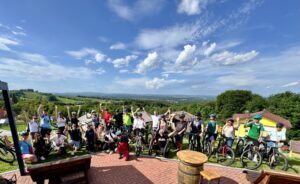
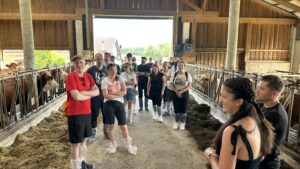 An important part of the conference was dedicated to field visits, where participants experienced Slovenian and cross-border rural areas directly. The visits presented good farming practices, farm succession, innovative approaches on farms, and the connection between agriculture, tourism, nature and local gastronomy.
Participants visited the wine-growing Slovenske gorice region, Prlekija, Prekmurje, modern dairy and fruit farms, as well as selected good practice examples in Hungary. The field visits showed how knowledge, innovation, tradition and local cooperation can support the sustainable development of rural areas.
Generational renewal as a human process
Generational renewal was highlighted throughout the conference as one of the central challenges of European agriculture. Participants stressed that farm succession is not only a transfer of ownership or management, but also a human process involving family relationships, trust, communication, social security, mental health and the transfer of knowledge between generations.
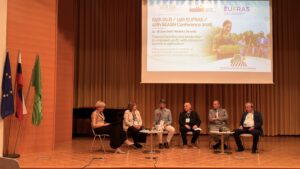
At the final round table, representatives of EUFRAS, IALB, SEASN and agricultural institutions discussed the ageing farming population, young people leaving rural areas, the role of women in agriculture, farm succession and the strengthening of advisory systems.
Dr Jože Podgoršek emphasised that young people bring new energy, new working methods, language skills and greater openness to project-based and international cooperation into advisory services. At the same time, he stressed that discussions on generational renewal should also include older farm owners transferring their farms, as successful succession is only possible if their position, social security, experience and role on the farm are taken into account.
Dr Slađan Stanković, President of SEASN, underlined the broader social importance of rural areas. He emphasised that supporting rural development is not only about access to land or financing, but also about strengthening rural communities and ensuring that young people and women receive real support through programmes and measures that actively reach them.
Key messages from Radenci
The conference clearly showed that the future of European agriculture depends on people, knowledge, trust and cooperation. Strong advisory services are essential for supporting farmers, connecting knowledge with practice, encouraging innovation and helping rural communities respond to future challenges.
The main message of the conference was clear: without young people and women, there is no future for European agriculture; without strong advisory systems, there is no successful transformation; and without trust, communication and knowledge transfer between generations, there can be no successful generational renewal.
The conference concluded with an invitation to the next IALB Conference, which will take place in Tyrol, Innsbruck, in 2027. The discussions and messages from Radenci will serve as an important basis for further work on generational renewal, the inclusion of young people and women, and the strengthening of agricultural advisory systems in Europe.
All conference photos and documents are available at the following link: https://www.kgzs.si/sieu2026. On the website, you can find the conference photo gallery, the Conclusions and Key Messages, as well as all presentations and other conference materials.


Leave a Reply